
When buyer intelligence, solution decisions and evidence arrive late, revisions multiply, reviewers revisit settled sections and writing time shrinks. Writer readiness gives the team enough direction to draft deliberately.
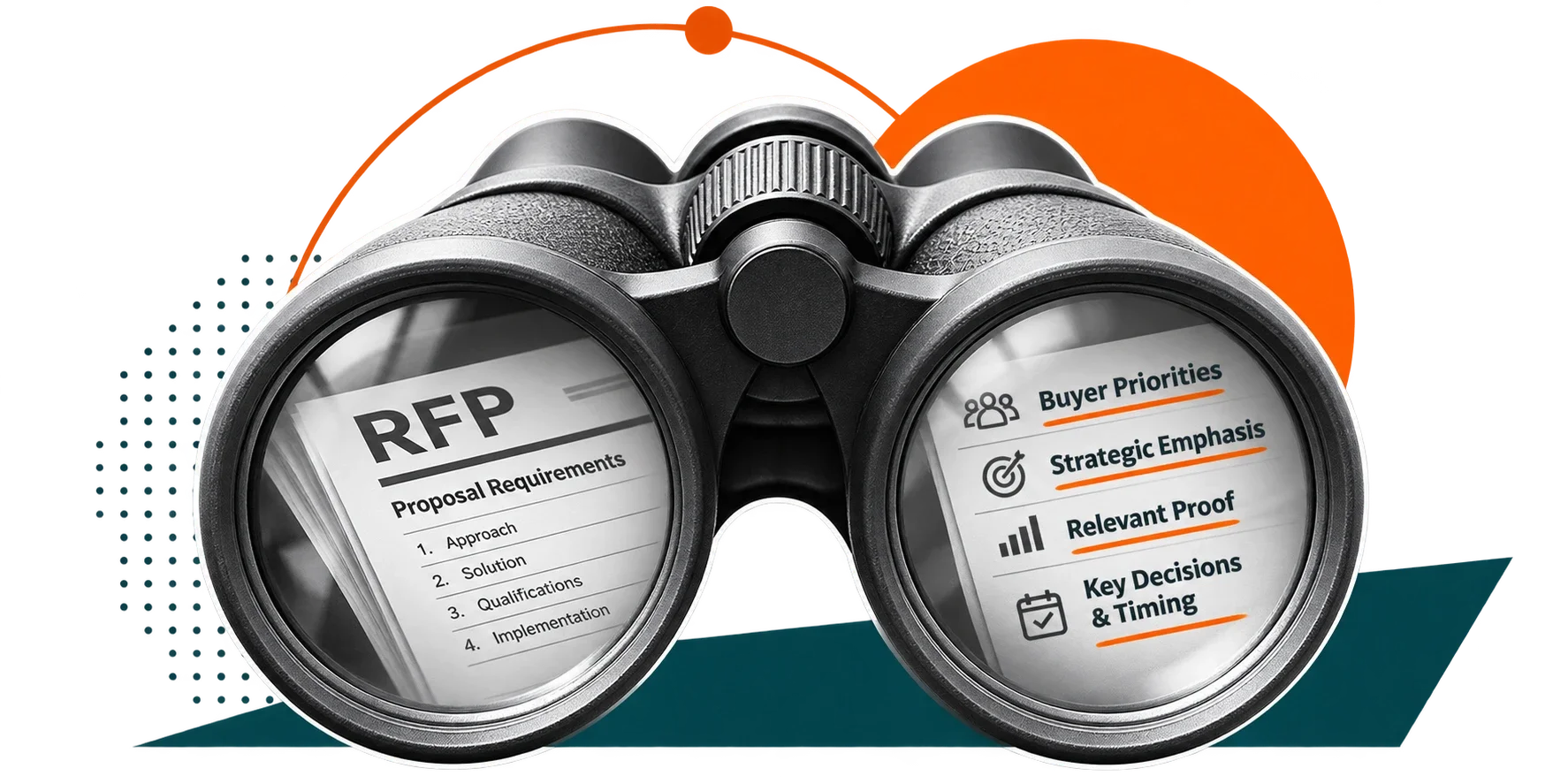
When the draft becomes the decision room
The response is substantially drafted just as a relationship manager surfaces a buyer concern that changes the argument. A country team then identifies a constraint, and the implementation approach needs to change. Sections that looked ready for review are back in development.
Consider a fictional six-country treasury-services pursuit. A global manufacturer wants to consolidate banking services. The proposal depends on relationship, product, country and implementation teams. Kickoff happens Monday; substantial drafting begins Wednesday, while buyer priorities and implementation sequencing are still being resolved.
Stakeholders may start with different assumptions about the buyer, solution or intended argument. Proposed language makes those differences visible. Review comments become the vehicle for deciding what the team means to offer, and each decision propagates through response sections, supporting evidence and approvals.
The proposal professional may see the gap without having the authority to secure a decision. Named decision owners, required dates and an escalation route give the writer a workable way to move an issue forward. This is a dependency to manage across the pursuit team.
Complex pursuits evolve, and useful revisions improve proposals. The operating problem arises when substantial drafting depends on foundational decisions that could have been surfaced earlier.
The capacity cost hidden inside the RFP response process
Late context is usually absorbed into everyday work: chasing clarification, rebuilding sections, replacing proof and reconciling reviews. The model below makes that effort visible across a year.
Use combined hours across the proposal professional and contributing relationship, product, country, implementation and review teams you include in your estimate. Keep that same scope for total team hours and the four categories. Each category must represent separate effort: count an hour once, under its main activity. For example, do not count the same evidence search under both inputs and proof.
Enter only the effort you attribute to late context in the four categories, rather than all routine coordination or review time.
The defaults model 16 affected hours per pursuit across 48 pursuits: 768 team hours, equivalent to 9.6 pursuit cycles at 80 hours each, or 20% of modeled team effort. These are illustrative assumptions, not industry benchmarks or verified Informed Pursuit results. Affected hours are not automatically recoverable capacity or cash savings; some coordination and iteration remain necessary.
Use the model to choose a next step: identify the largest source of affected effort, examine a recent pursuit and trace which recurring late input could have been addressed earlier.
Useful iteration or avoidable rework?
New buyer intelligence that sharpens an established argument is useful iteration. A known implementation constraint reaching the writer after several sections have been built around an incompatible approach creates avoidable rework.
Writer readiness supports deliberate drafting while leaving room for the pursuit to evolve. It gives the writer a usable starting point and a way to manage what remains open.
Six outputs that make a pursuit writer-ready
A team needs enough direction to shape an argument, select relevant proof and describe supportable commitments. Each readiness area should produce something the writer can use:
Buyer: Ranked priorities, with sources and assumptions identified.
Strategy: Response emphasis and the intended evaluator takeaway.
Solution: Confirmed scope, constraints and open decisions.
Evidence: Supported claims, relevant proof and evidence gaps.
Ownership: Named decision owners and required dates.
Execution: Review sequence, approval responsibilities and submission requirements.
Ready
drafting
Fit the Writer-Ready Gate into kickoff
The Writer-Ready Gate is a practical checkpoint after initial kickoff inputs are assembled and before substantial drafting. It can sit within your existing response workflow.
The proposal lead brings the relationship owner, relevant product and country specialists, and implementation lead together to confirm the six outputs. The proposal lead and accountable pursuit owner determine whether sufficient direction exists, with specialists confirming feasibility and authorized owners approving commitments.
Record unresolved issues in a shared decision log: the question, owner, affected sections, required date, interim writing direction and escalation route. Draft stable sections while dependent claims remain flagged. If a deadline slips, the pursuit owner resolves the priority or agrees a supportable fallback before the affected language advances to approval.
Example decision-log entry: Can the ERP-dependent country join the first implementation wave? Owner: the named implementation lead. Affects: sequencing, connectivity/testing and cutover sections. Decision due: Thursday noon, before Friday review. Interim direction: describe readiness-based waves; leave this country’s placement open and make no fixed cutover commitment. Escalate to the pursuit owner if the decision is late.
What the Writer-Ready Brief gives the writer
The brief brings agreed direction and open decisions into one usable reference. This compact excerpt follows the six-country implementation example:
Buyer priority: Maintain payment continuity while balancing centralized oversight with local operational requirements.
Country constraints: An upcoming ERP release in one country and outstanding account-authority changes in another may affect sequencing and cutover readiness.
Proposed direction: Use readiness-based country waves, define cutover conditions, assign decision ownership and resolve dependencies that threaten the schedule.
Validation required: Implementation leadership and appropriate product and country specialists must confirm feasibility, sequencing, ownership and commitments before client-ready use.
Writing direction: Lead with payment continuity. Explain the proposed waves, readiness criteria, decision ownership and how unresolved dependencies affect cutover decisions.
The writer can now build an argument connecting payment continuity to readiness and decision ownership. Proposed direction remains distinct from validated commitments; the brief shows where specialist decisions are still needed.
Use AI against established direction
AI can help organize source material, surface conflicting inputs, flag evidence gaps or unsupported claims, and support drafting from the brief. People still decide which buyer priorities matter, whether the solution is feasible, what can be committed and which evidence supports each claim.
This approach can work with a client’s existing approved tools, information-handling requirements and review processes. Agree access and AI use before work begins, and retain human review of source interpretation and response content.
How Informed Pursuit can help
Through Hands-On RFP Pursuit Support, Informed Pursuit can examine requirements, evaluation criteria, buyer context and existing material, then use stakeholder interviews to turn that information into response direction. Confirmed intelligence, working hypotheses and client decisions requiring validation remain clearly identified.
Agreed outputs can include a response plan, evidence priorities, draft sections, a requirements tracker, contributor responsibilities and a review schedule. Your team provides an internal sponsor, accurate source material and access to specialists, and approves technical claims, pricing, commercial commitments and the final response.
These outputs give writers a common basis for drafting and reviewers a clearer basis for feedback. They preserve the strategic role of the proposal professional: challenging assumptions, shaping arguments and making complex information clear to evaluators.
See how pursuit intelligence becomes writing direction
In this illustrative six-country treasury implementation example, follow the buyer priority, country constraints and proposed approach into a Writer-Ready Brief. See what the writer can use, what still requires validation and how that direction changes the response.
If late decisions repeatedly change your drafts, talk with Informed Pursuit about where the rework begins and what your team needs before substantial writing starts.